Before you call
Turn your observations and questions into a short summary you can read, copy, or print.
Make free call notes →Standing water, a burst pipe, or a spreading leak? Connect with a restoration provider about water removal, drying, and cleanup.
Ask about the earliest available help. Your provider confirms arrival times.
What happens when I call? →Call about the damage at your property, or explore the cleanup and drying information below.
Explore restoration services →Standing water, leaks, and wet building materials.
Backups and water that may contain contaminants.
Visible growth, recurring dampness, or musty odors.
Smoke residue, damaged belongings, and firefighting water.
Water damage in businesses, tenant spaces, and shared buildings.
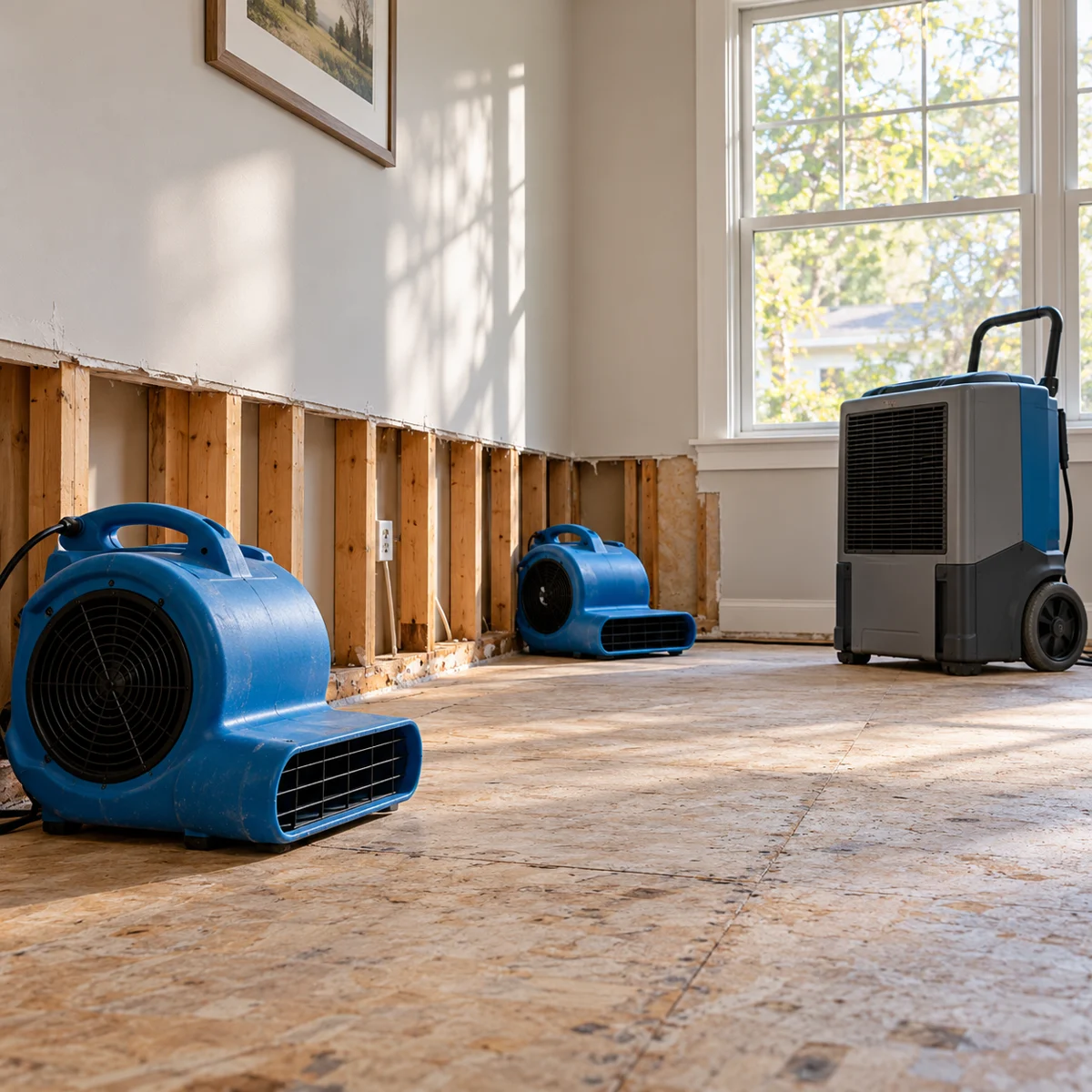
Water damage restoration can include removing water, drying affected materials, cleaning, and repairing damaged interiors. The assessment should identify which stages your property needs and who will handle each one.
Water removal addresses standing water; assessment identifies affected rooms and materials, including areas beyond the visible puddle.
Drying addresses remaining moisture in affected materials. Progress checks help the provider decide when equipment can be removed.
Cleanup and repairs address damaged materials and interiors. The proposal should identify what can be retained and what needs replacement.
The estimate needs to account for the affected rooms and materials, the type of water involved, equipment use, monitoring visits, disposal, and repairs. Ask for a written scope and explain how additional work must be approved. A city-wide price cannot establish the cost of your property’s damage.
Compare written restoration estimates →A suspected sewer backup may also need a public-system report. Boston Water and Sewer Commission’s reporting guidance is separate from arranging indoor restoration. Our phone number connects you with restoration providers; contact the Commission directly for public-system reporting.
Find water damage help in your area, with local resources and guidance for affected homes and buildings.
These optional tools help you organize damage notes and compare estimates. Your entries stay with you; nothing is sent to a provider.
Turn your observations and questions into a short summary you can read, copy, or print.
Make free call notes →Enter two providers’ totals and scope details to see differences and questions to clarify.
Compare your estimates for free →Organize incident notes, building access, approval contacts, and estimate questions in one printable packet.
Use the free property-manager packet →Yes. Phone connections are available 24 hours a day, seven days a week. The provider confirms when someone can visit and any charges.
The receiving provider confirms their own availability and any arrival window. This website does not have access to live crew schedules.
Affected materials, contamination, equipment use, cleanup, and repairs shape the proposed price. Ask for the assessment fee before a visit and a written estimate before authorizing work.
The materials, extent of damage, and drying progress affect the timeline. The provider assesses the property and explains the proposed schedule; repairs may continue after drying is complete.
You can call about water damage in a home, rental, business, or managed building. Describe the affected rooms and materials so the receiving provider can confirm the work they handle.
Tell the provider where the water is and what it has affected. Discuss cleanup and the next step for your property.